.png)
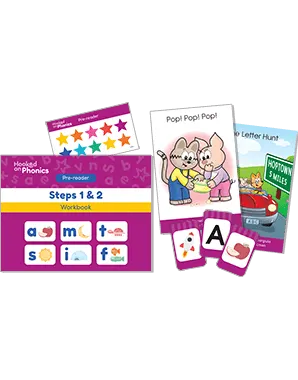
The Hooked on Phonics (HoP) Pre-reader program includes Steps 1-12 and focuses on foundational letter and sound skills. Each of the five shipments includes a workbook, two physical storybooks, and stickers, while the first shipment also includes flashcards. Our research focused on the program’s 10 physical storybooks.
These research questions guided our investigation into how parents use HoP storybooks, structure reading sessions, perceive their learning value, and identify what makes books memorable for children.
How do expectations and actual usage/quality of the storybook differ?
How aligned are parents' expectations with HoP's intended learning curriculum?
How do parents actually structure reading sessions with their child?
How do reading sessions differ between HoP storybooks and other books their child reads?
How do parents perceive the learning benefits that storybooks provide for their child at home?
What makes a book "stick" with a child or parents?
Conducted 30-45 minute moderated one on one interviews with 7 parents, including six mothers and one father, who had received all 10 storybooks. The interviews gathered qualitative insights into reading habits, book selection and usage, engagement with storybooks, and perceived learning impact.
Used AI to accelerate transcript tagging and identify recurring themes, behavioral patterns, and relevant quotes across interviews. I then reviewed and refined the AI-generated tags to ensure they accurately reflected participant responses before using them in qualitative synthesis.
Synthesized qualitative highlight clusters into interactive visual affinity maps to drive strategic design requirements and UX improvements.
Due to confidentiality considerations, I'm sharing a high-level overview of the research findings and key takeaways while keeping specific details private.
Misaligned expectations around independent use leads to frustration, underuse, and disengagement from HoP materials.
HoP storybooks are primarily used as structured, parent-led learning tools, limiting independent engagement compared with other books that are part of more flexible, child-led reading routines centered on enjoyment and choice.
Parents recognize storybooks as tools for skill-building, not just reading practice.
A “sticky” book creates opportunities for interactivity, either built into the book or encouraged through parent-led playfulness.
Due to confidentiality considerations, these recommendations are a high-level overview of the research while keeping specific findings and details private.
Parents need placement tests that determines the curriculum their child receives, ensuring it matches their pace and prevents disengagement.
Parents need clear guidance (video/parent guide) on how materials should be used to prevent misaligned expectations and disengagement.
Incorporate more interactive moments into storybooks to encourage active participation and create more memorable reading experiences.
Redesign the paperback storybooks as hardcover editions to give them a stronger physical presence, helping them stand out on shelves and making children more likely to notice and choose them.
By supporting parents from onboarding through continued use, these recommendations also make storybooks easier for children to discover and enjoy.